CSO Monitoring
Join Our CSO Monitoring Team
The Delaware Riverkeeper Network and Riverways Collaboration are recruiting dedicated individuals willing to conduct weekly visual assessments of Combined Sewer Overflow outfalls and recreational conditions in the Philadelphia region.
Become a monitor & register today!
What are CSOs?
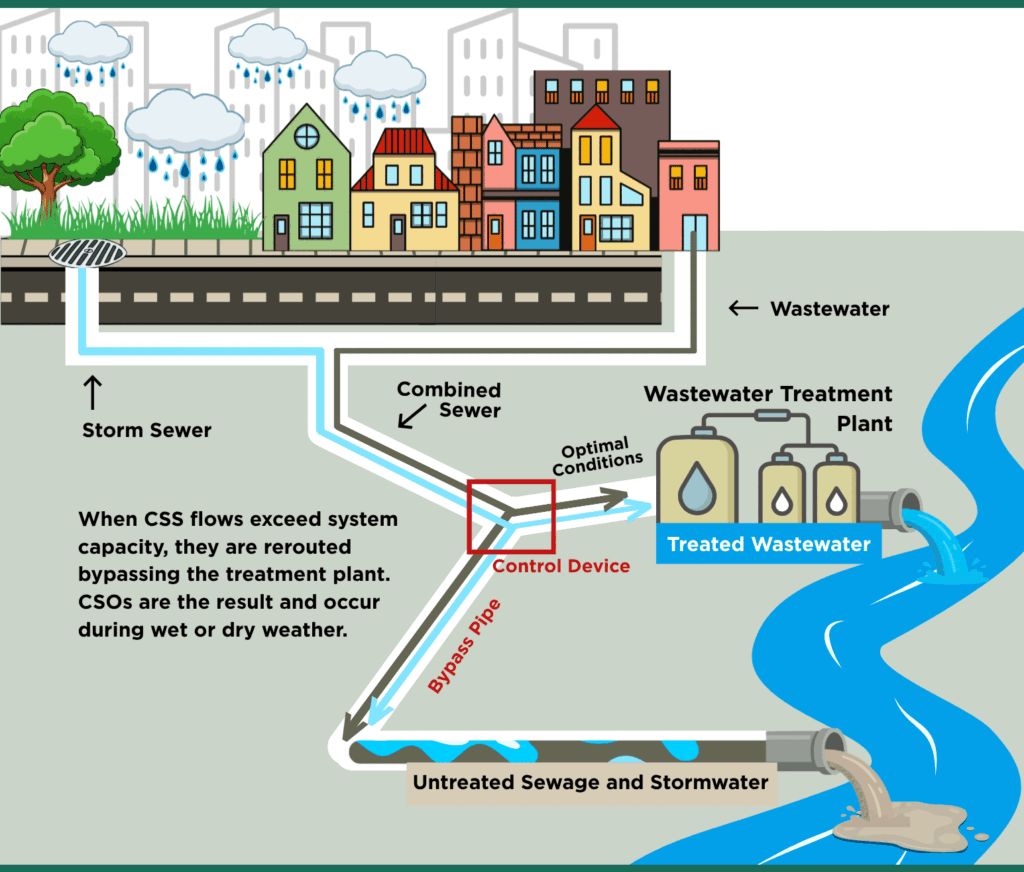
Older cities, like Philadelphia, are serviced by a combined sewer system that collects rainwater runoff, domestic sewage, and industrial wastewater into one pipe. Normally, the pipe can transport all of the wastewater to a treatment plant. Sometimes the amount of runoff exceeds the capacity of the piping system. This is typical when it rains or the system becomes overloaded. When that happens, untreated stormwater and wastewater flows into nearby waterbodies, causing what is known as a Combined Sewer Overflow. Nearly every creek, stream and river in the Philadelphia and Camden region are impacted by a combined sewer system.
What are the impacts?
CSOs carry raw sewage, industrial wastewater and pollutants from roads and parking lots. Discharged into our waterways, these flows impair water quality and present risks to the health of those recreating (walking, biking, paddling, etc.) in or around the contaminated waterways.
Why Collect This Information?
Annually, billions of gallons of CSOs flow through neighborhoods, parks, and playgrounds, and discharge into Philadelphia creeks, and the Schuylkill and Delaware Rivers. The sewer systems in Philadelphia and Camden are being updated, but DRN believes the pace of this work must increase. Clean water is a basic right, but it has been taken from communities that bear the burden of CSOs.
Working with Riverways and other local organizations and individuals, our approach will center on community scientists engaging in the CSO landscape to advocate and demand near term improvements through CSO reductions.
We will use our team of volunteers (you!) to document and monitor the effects of raw sewage overflows in Philadelphia’s waterways. These effects will be brought to the Philadelphia City Council, Pennsylvania Department of Environmental Protection, and US Environmental Protection Agency to demand CSO implementation that corrects persistent problems, prioritizes reductions in smaller streams with no dilution or assimilative capacity, and maximizes opportunities for capture and treatment of all sewage flows.
Frequency
We hope to collect photo evidence and other parameters from CSO sites at least once a week.
Join our CSO Monitoring Team View CSO FactsheetData Collection Steps
Step 1: What will you be collecting?
You can find a data sheet that lists the parameters you will be documenting at this link. Data will be documented and submitted through Survey123 when you are out in the field.
Download Data SheetStep 2: Data Submission
After each outfall visit, you will submit your data through Survey123*. This includes visual observations and pictures. Someone from our team may reach out to clarify any submissions, so please provide an email or mobile phone number that you check regularly.
Submit Survey123 Data Now*ArcGIS Survey123 is an easy-to-use, form-centric data collection application that uses smart forms to create, capture, and analyze high-quality survey data.
If you come across an active Combined Sewer Overflow during a period of dry-weather (3+ days no rainfall) this must be reported to the Philadelphia Water Department call center at 215-685-6300. Please see the link for guidance. Monitors will also alert DRN staff with the location, time, outfall ID, picture or video of outfall, and a summary of your report that was made to PWD.
Step 3: Repeat Once a Week
Step 4: Get Involved with Our Advocacy Work! (Optional)
More On DRN’s AdvocacyRiverwatch Video
Learn more about this topic by watching
Riverwatch – Taking On Combined Sewer Overflows in the Greater Philadelphia Area video.
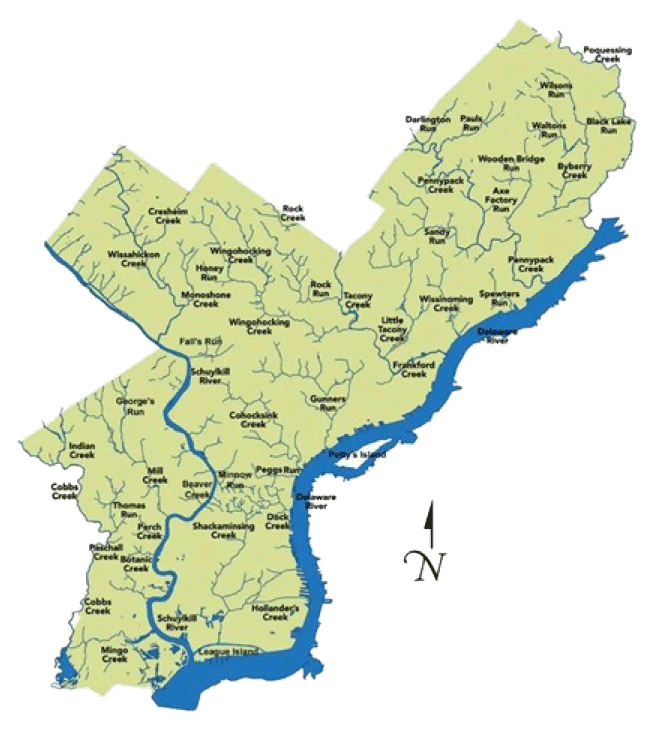
Philadelphia’s Historic Streams